Did you know that mistletoe — a familiar Yuletide sight — is actually a parasite? Its sticky seeds are often carried and placed onto trees by birds. Once on a host, the seeds germinate and put out roots, actually stealing food and water from the tree’s tissues while its new leaves become green. It forms into distinctive “ball-like” clumps, and its survival depends upon its host.
In a similar fashion, our spiritual survival depends on our connection to the divine. Our ability to grow, to bring forth new ideas, to express ourselves and live life to the fullest requires a strong spiritual support system.
Here’s a gentle meditation that focuses on the ideas of connection and support, as well as on the popular “kissing custom” we associate with mistletoe. So, take a moment to relax. You can read through the meditation first and then quietly envision the experience, or you can turn on your “text reader” and have the meditation read slowly as you enter a quiet, reflective state.
MISTLETOE MEDITATION
Close your eyes and breathe deeply. Let your body relax, and allow your thoughts to settle. Bring your attention to the stillness inside you — it’s not a void, but a place of waiting… waiting in the stillness. Envision a seed within that stillness. It is small, but it is complete. It can grow to fullness if planted and tended. It is the seed of an idea, an intention, a new beginning, a creative adventure. It can be the seed of whatever you need to manifest in your life. It is a seed of possibility.
Now picture the mistletoe — green and vibrant on the bare winter branch. It, too, is a seed-bearer. Not rooted in soil, but in trust. It lives in the cold, sustained by light and air, carrying life through the longest night. It is a sign: even now, growth is possible.
Feel the connection. The seed within you is no different. It is held securely just as the mistletoe is securely held in place by its roots. The seed is nourished, even though unseen. This seed is protected, even in the darkness.
Now, imagine the presence of the divine — not distant, but near. A presence that sees this seed, honors it, and blesses it with love. Feel the divine bless you with a gentle kiss on your forehead, like a soft whisper. Here the divine promise: I am with you.
Let that kiss warm you. Let it strengthen your assurance that this seed will grow, and that one day it will open and bloom.
Remain quiet. Breathe deeply. Stay in the stillness for as long as you wish, remembering the blessing you’ve been given.
When you’re ready, open your eyes and gently return to the presence knowing that you have been kissed by the divine beneath the Yuletide mistletoe.
Halloween is almost upon us, and that means lots of psychic fairs and presentations going on. If you’re a professional Tarot reader, you’re probably already signed up for a booth or reading table. Experienced readers know that they’ll be meeting a lot of, shall we say, interesting querents. First-time readers, however, might not be fully prepared for the folks they’ll be reading for!
Let me say, first and foremost, Tarot querents are usually great people. They’re friendly, they’re open-minded, they’re genuinely seeking advice about their life. So, please, don’t take this article too seriously. It’s meant to be light-hearted and humorous, while offering a bit of helpful advice at the same time.
When you’re reading at a fair or at a little shop, you really don’t have any say in who comes to sit down at your table. So, you smile at everyone, shuffle your deck, and do your best to provide the guidance your querent is seeking. And, on the rare occasion when you do find yourself facing a difficult querent, you respond as politely and pleasantly as possible.
So, let’s take a look at a few stinkers who might ask you for a reading!
#1 The Reticent Querent
She’s usually female, often a bit older, and she’s determined not to say anything more than she must. Her lips are tightly sealed, and she refuses to divulge any information about herself. Should you ask, you’ll hear her quip, “Well, you’re the reader, so you tell me!” She expects you to provide her with her entire life story, figure out what problems she’s facing, and tell her exactly what she’s supposed to do — all without a single word from her.
How to Deal with the Reticent Querent
Approach the reading with empathy and understanding, acknowledging that it’s natural to feel apprehensive about sharing personal information.
Explain the importance of context and collaboration in a Tarot reading, emphasizing that the more the reader knows, the more accurate and helpful the reading can be.
Offer reassurance that all information shared during the reading will be kept confidential.
Be prepared to rely more heavily on intuition and the cards’ general meanings when working with a reticent querent.
Focus on asking open-ended questions that encourage the querent to share more without pushing them out of their comfort zone.
#2 The Contrarian Querent
This difficult querent could be female, could be male, could be younger, could be older… could be, in fact, just about anyone. You’ll know them not by how they look or how they act, but by what they say. “No, that’s not right.” They’ll do a lot of head-shaking, and no matter what you tell them, they’ll tell you that you’re wrong. It can be disheartening, but most likely you’re right on the mark. They just don’t want to admit to any possible flaws or weaknesses, or open their eyes to any potential problems you’re showing them.
How to Deal with the Contrarian Querent
Maintain your composure and stay confident in your abilities, even when the Contrarian Querent challenges your interpretations.
Try to reframe your insights as potential opportunities for growth or self-awareness, rather than highlighting flaws or weaknesses.
Encourage the querent to keep an open mind and consider the possibility that there might be some truth in the reading, even if it’s difficult to accept.
Remember that it’s ultimately up to the querent to decide what resonates with them and what doesn’t, and that you can’t force them to accept your interpretations.
#3 The Know-It-All Querent
This querent can come in all different shapes and sizes. He or she is usually more than happy to tell you all about their problems. Once you begin laying out the cards, this querent is also more than happy to tell you what everything means. They may listen to your interpretations, but then they’ll add their own, pointing to obscure little symbols and telling you what this means or that means, and suggesting that you’ve left out a lot of possible interpretations. They’re not questioning you; they’re educating you. They obviously know much more about Tarot cards than you do!
How to Deal with the Know-It-All Querent
First of all, let them talk! They love to hear the sound of their own voice, and they think they’re doing you a service by sharing their knowledge. Don’t object, don’t disagree. Just remember, you’re being paid for this, so sit back and let them take the lead.
Try to remain open-minded and receptive to the Know-It-All Querent’s insights, as they may offer valuable perspectives you hadn’t considered.
If their assertions upset you, politely mention your experience as a Tarot reader, and explain that your interpretations are based on your unique understanding of the cards.
#4 The Lecherous Querent
This one you really, really want to avoid! He’s a young adult male, and he thinks he’s hot. He also thinks a “psychic fair” might be just the place for a quick pick-up. He’s there to turn on his charm, and he thinks you’ll fall for it. He’ll sit down at your table, give you a sultry look and ask provocative questions, like “Am I going to get lucky tonight?”
How to Deal with the Lecherous Querent
Set clear boundaries from the beginning, emphasizing that you maintain a professional and respectful atmosphere during readings.
Redirect the conversation to more appropriate topics, and make it clear that you won’t be engaging in any sexual or flirtatious banter.
If the querent’s behavior becomes inappropriate or uncomfortable, don’t hesitate to end the reading early or involve event organizers if necessary.
Consider having a statement about professional conduct in plain view, so that potential clients know what is and isn’t acceptable during a reading.
#5 The Foul-Mouthed Querent
This one is usually male, and maybe his language won’t bother you. After all, vulgarity has become part of everyday speech. That said, I’m not one who’s comfortable hearing “f-bombs” and other bits of foul language. It’s not that this querent is deliberately trying to be disrespectful. It’s just the way he talks. So, it’s up to you as to whether or not you’ll read for him.
How to Deal with the Foul-Mouthed Querent
If you decide to read for the Foul-Mouthed Querent, consider gently expressing your discomfort with their language and asking them to refrain from using profanity during the reading.
Alternatively, you could focus on the reading itself and try to tune out any offensive language, understanding that it may not be personal or directed at you.
If their language continues to bother you, it’s perfectly acceptable to politely decline to read for them or suggest that they find another reader who may be more comfortable with their language.
#6 The Skeptical Querent
The querent — male or female — can be frustrating. They’re not really there for a reading. To them, Tarot and other divinatory methods are all a joke. Their real intent is to trick you, to trap you into saying something that — to them — proves “it’s all a hoax”. No matter what the cards say, they won’t believe a word of it. Their intention is to make you feel that you’ve been bamboozled into believing some “airy-fairy mumbo-jumbo”. They, of course, are much too smart to fall for such things.
How to Deal with the Skeptical Querent
Maintain your composure and professionalism, even if the Skeptical Querent is trying to push your buttons.
Be prepared to explain the value of Tarot as a tool for self-discovery, introspection, and guidance, rather than a magical crystal ball that predicts the future.
Consider using more neutral or practical language when discussing the cards and their interpretations, to make the reading more relatable for a skeptic.
Ultimately, accept that you may not be able to change their mind, and focus on providing a thorough and informative reading for your own satisfaction and integrity as a Tarot reader.
On the Serious Side
Although this is presented somewhat tongue-in-cheek, it does address issues that could become very problematic. If you’re reading at a fair or in a little shop, you need to remember that you’re in control.
Trust your instincts: If something feels off or makes you uncomfortable, don’t hesitate to end the reading or politely decline to begin one.
Have a support system: Let your fellow readers or event organizers know if you’re having any issues with a client, so they can step in and help if needed.
Establish clear guidelines: Make sure clients understand your policies and expectations before the reading begins, such as maintaining respectful behavior and language.
Stay professional: Even if a client becomes difficult or confrontational, maintain a calm and professional demeanor, and focus on de-escalating the situation if possible.
Prioritize self-care: Take breaks when needed, and seek support from friends, colleagues, or a therapist if you find yourself feeling overwhelmed or distressed.
What About Refunds?
If you have a querent who is truly unhappy with your reading, should you offer to refund their money — or return their ticket so that they can use it elsewhere?
The simple answer is NO. Most psychic fairs and reading venues have strict policies — usually clearly posted — stating that reading services are NOT REFUNDABLE. When you signed up to participate as a reader, you more than likely signed an agreement that you would follow the organizers’ rules.
If you’re reading for a group where this policy is not in effect, the ultimate decision on a refund is yours. Offering a refund to an angry or disappointed querent is one way to de-escalate a situation, but it’s usually not the best resolution. You might offer a disgruntled querent a discount on a future reading, suggesting that they “give it a little time” and then return at a later date, or if you do private readings, suggest that they contact you again in the future. Make clear that you stand behind your work and ask that your querent respect your abilities.
Have you dealt with any of these difficult querents in your Tarot practice?
Do you have any other “stinkers” to add to the list?
Share your thoughts and experiences in the comment below!
I recently set out to explore the concept of “human suffering” through Tarot. I used a short, simple four-card spread and tried to interpret the cards from a “philosophical” point of view. As I considered each card, I added information I gained through research.
In this article here, I’m not listing the Tarot cards that appeared. I thought it might be interesting for readers to ponder the points I’ve included and make their own guesses about the cards the ideas were based upon.
This examination of human suffering begins with the recognition that individuals frequently contribute to their own unhappiness by dwelling on the past and by resisting change. This desire to stay locked in the past makes it difficult for us to appreciate present-moment opportunities. We deny ourselves opportunities for joy and happiness. A similar idea is found in Stoic philosophy which teaches that we should accept change and focus on what we are able to control rather than stubbornly resisting new ideas and new ways. Clinging to a past that no longer exists is a key element in much of our suffering.
In addition to personal tendencies to hold on to the past, we are also susceptible to external influences that may distort our perceptions. These influences may include rigid ideologies, authoritarian systems, or manipulative narratives, which can be employed by others to exert control over our behavior. In certain cases, people around us may derive pleasure or actual benefit from our continued suffering, making it all but impossible for us to move forward and find effective solutions. This harmful dynamic is mirrored by existentialist concerns about authenticity and the pressures of conforming to external authorities. Pyschological research also emphasizes the importance of “being true” to who we are, and not allowing others to exert control over us.
Further analysis reveals that the central root of human suffering lies in the concept of choice. Existentialist thinkers such as Sartre and Kierkegaard emphasize personal responsibility and the role of choice in shaping one’s experience. We may make unwise decisions due to a lack of understanding, conflicting values, or external pressures, resulting in harm, regret, or hardship. Human suffering, therefore, is not the product of cruel fate or divine punishment, but rather emerges as a natural consequence of decisions made in states of confusion, fear, or misunderstanding. Modern psychology supports this view, highlighting how cognitive patterns and emotional states influence decision-making and life outcomes.
How do we move forward? How do we overcome suffering?
Passion and courage have the potential to move us out of our suffering. When actions are motivated by genuine energy and conviction—rather than by fear or obligation—we are more likely to make decisions that reflect who we truly are, decisions that allow us to live authentically and disrupt negative cycles from the past. While active engagement does not guarantee success, a willingness to step forward, accept responsibility, and participate directly in life creates the possibility for meaningful change. This aligns with existentialist ideals of authentic living and the Stoic pursuit of virtue through intentional action.
Conclusion
In summary, human suffering is shaped by both internal and external factors: our tendency to dwell on the past, the influence of outside forces, and the choices we make under pressure or uncertainty. Recognizing the role of choice empowers us to break free from harmful patterns. By cultivating passion, courage, and a willingness to engage with life—principles echoed in existentialist, Stoic, and psychological thought—it becomes possible to overcome stagnation and pursue meaningful change.
We often think of winter as bleak and dreary, but December is actually a month of stunning color. For those of us in cold climes, the ground will soon be covered with a blanket of glistening white snow, while silver icicles hang from the eaves of our houses. Wreaths of green pines trimmed with bright red ribbons will go up on our doors, and the winter skies will turn an indescribably brilliant blue. At night, the skies become dark, yet twinkling stars invite us to celebrate the winter season.
This year, the winter solstice occurs on December 21. The official time for the start of winter is 9:03 AM. So, what — exactly — is a “solstice”? It’s a celestial event that occurs when the sun is at its lowest point in the sky, meaning that we’ll have the fewest hours of daylight and the longest night of the year.
For spiritual practitioners, the solstice is often seen as a time of “shifting vibrations”. It is a time for introspection, renewal, and hope as we come to the end of one cycle and begin the next. Beginning at the solstice, the sun will linger with us a bit longer each day, and this “return of the light” represents rebirth and new beginnings. We reflect on the passing year, we set intentions for the future, and we gather with friends and family to share gifts and good cheer.
On the Wheel of the Year, we celebrate the season of Yule. One tradition is to burn a Yule log. Ashes are saved, (we keep ours in a small pouch that we hang near the fireplace) and those ashes are then added to the following year’s Yule log burning.
It’s a time for gratitude as we give thanks for the gift of life the sun has given us. Sometimes in the coldness of winter, we forget to be thankful. We bundle up to face the elements as we venture out into the cold for work, and we wear ourselves out with the hustle and bustle of shopping, wrapping gifts, cooking, baking, and scheduling festivities. At times it can be overwhelming.
During this month of December, I encourage us to slow down, to take a cue from nature itself and rest as needed. I offer you a short blessing to begin each day:
“May I walk gently today, breathe deeply, and hold kindness close. May warmth rise within me, even when the world is cold. May light guide my steps, and peace steady my heart. May I celebrate the coming season with joy in my heart. So mote it be!”
Note: This intuitive tarot spread was first published at Spirit of Tarot.
Today we’ll turn to Tarot directly for insights on awakening the third eye. I’ve put together a simple four-card spread that will reveal the secrets of your own third eye opening.
I haven’t put this together in any definite shape — that’s something you can do intuitively. You can lay the cards out in a single row, create a cross-shape, or fan them out in a way that feels right for you. With this reading, as with so many things in Tarot, intuition is definitely key, so trust your feelings. Go with your instincts.
You can also choose the cards in whatever manner feels right. You can shuffle, cut, draw. You can go through the cards face-down and intuitively pick cards for each of the four positions. You can fan out the entire deck and choose cards as you go through the reading.
Another method you might enjoy would be — after shuffling — to go through the deck until you come to the High Priestess. Then select the 2 cards in front and the 2 cards in back and place them into the spread, perhaps putting the High Priestess herself in the center for added inspiration.
What Do the Positions Represent?
Here is a break-down of the meanings for each position of the spread. Use these as guidelines. This is all about intuition, so allow your inner voice to guide you in your interpretations.
Card 1: The Current State of Your Third Eye
This card represents your current level of spiritual awareness and intuition. You may find a highly-positive card here to suggest that your third eye is opening and that you are awakening to spiritual truths now. A less positive card could indicate problem areas. Whatever card you draw will offer helpful advice, so “tune in” to the overall concepts of the card. Again, trust your instincts.
Card 2: Blocking Factors
Even when our third eye is open, we must still guard against blocks — negative thought patterns and other obstacles — that can hinder our intuitive development or make it more difficult for us to exercise and fully trust our inner voice. Take a good look at the card you draw for this position. It can be a tricky one to interpret. Ask “How might this card be holding me back?” Find the message and then take a moment to write out a personal affirmation to help you deal with whatever obstacles the card represents for you. Make your affirmation positive.
Card 3: Steps to Awakening
This card will offer helpful guidance, suggesting specific actions you can take that will help you deal with blocks and continue the awakening process. Spend as much time as necessary with this card. Look at all the symbolism it holds. Write down your thoughts. Can you come up with at least 3 specific actions suggested by the card? Sometimes in metaphysical and spiritual matters, we rely on general platitudes — be mindful, go with the flow, follow your heart — and while these are all good practices, they lack the specificity of what to do right now. Go deeper into the card you’ve drawn. Use your imagination here, too.
Card 4: Looking Toward the Future
What potential benefits and positive changes will you experience as you complete the third eye awakening process? This can be another challenging card to interpret because too often we have “knee-jerk” reactions to difficult cards. When we see a card we consider negative, we may quickly shut out any true understanding of what the card is telling us. In the context of this “Third Eye Awakening” spread, a negative card here is showing you the sort of problematic situations you’ll be better able to handle as a result of your increased intuitive awareness. Look at the card from every angle. Consider the many different situations it can represent and focus on how “awakening” will make it easier for you to deal with future challenges.
NOTE: This is excerpted from an article previously published on Spirit of Tarot
What Is the Third Eye?
The third eye is a spiritual concept that refers to an invisible, mystical eye located on the forehead, just above and between the eyebrows. It is associated with the Ajna chakra in the Hindu tradition and is often considered the source of intuition, insight, and higher consciousness.
When the third eye is “open” or activated, it allows an individual to access their inner wisdom and connect with the divine. This heightened state of awareness can lead to increased empathy, self-reflection, and a deeper understanding of the world and one’s place within it.
In essence, the third eye is a powerful symbol of spiritual growth, enlightenment, and the development of one’s psychic abilities.
What Does this Have to Do with Tarot?
There are many important reasons why we, as Tarot readers, should learn about the Third Eye and take steps to “open” or “activate” it.
Intuition: An active third eye strengthens your intuition, allowing you to pick up on subtle cues and messages from the Tarot cards that you might otherwise miss.
Deeper Understanding: The third eye helps you connect with the universal wisdom, enabling you to interpret Tarot cards on a deeper level and discern their true meaning.
Clarity: With an open third eye, your mind becomes more focused and less prone to distractions, leading to clearer and more insightful readings.
Empathy: As your third eye opens, your ability to empathize with others also increases, which can help you provide more compassionate and understanding readings for your clients.
Spiritual Guidance: Opening your third eye allows you to tap into higher levels of consciousness, enabling you to receive guidance from spiritual entities or your higher self during Tarot readings.
In short, developing your third eye can significantly improve your Tarot reading skills by enhancing your intuition, understanding, clarity, empathy, and connection to spiritual wisdom.
How Can We Open the Third Eye?
As I read and researched more about opening the Third Eye, I was directed to a number of helpful resources. One very simple idea I discovered was haritaki supplements. Please note that I’m not a medical practitioner. The information provided here is educational only. I am neither expressing approval for these supplements nor making any recommendations for their use.
Haritaki — terminalia chebula — is a fruit that has been used in Ayurvedic medicine for centuries. Modern scientific research has affirmed many health benefits from haritaki. According to holistic health practitioners, it can awaken the intuition, increase mystical powers, and open the third eye. It also increases brain capacity, improves memory, and improves digestion by removing toxins from the system.
Perhaps the best-known and most widely-practiced method for opening the Third Eye is through meditation. By quieting the mind and focusing inward, meditation helps you access higher levels of consciousness and develop a deeper awareness of your inner self.
Here are some ways that meditation can help open the third eye:
Chakra Meditation: Focusing on the Ajna chakra, or third eye chakra, during meditation can help balance and activate it.
Visualization: Visualizing a violet or indigo light or an image of an eye in the center of your forehead can stimulate the third eye during meditation.
Breathwork: Focusing on your breath and practicing pranayama techniques, like alternate nostril breathing, can help calm the mind and open the third eye.
Consistent meditation practice can lead to a more open and active third eye, which can enhance your intuition, creativity, and overall sense of spiritual connection.
As part of meditation, you might also want to add a mantra. This is a single word or phrase which is repeated during the meditation process. The following are said to be especially helpful in working with the Third Eye:
“Om”: This is the most well-known mantra in Hinduism and is believed to be the primordial sound of the universe. Chanting “Om” can help awaken your third eye and connect you to the universal consciousness.
“Shambhavi”: This mantra is associated with Shiva, the Hindu god of destruction and regeneration. Chanting “Shambhavi” is believed to help open the third eye and reveal hidden truths.
“Aum Mani Padme Hum”: This is a popular Buddhist mantra that translates to “the jewel in the lotus.” Chanting this mantra can help awaken your third eye and promote compassion and wisdom.
Another is the Gayatri Mantra. This is a powerful Hindu mantra that is often chanted for protection and enlightenment.
Recommended Reading
Of course, being a reader, I was naturally drawn to books on the topic of the Third Eye. I found several that provided information and exercises for Third Eye activation.
Third Eye by Valerie Holt
I thoroughly enjoyed this book. It is filled with helpful advice, practical information — such as teas, crystals, and aromatherapies — about opening the Third Eye. Holt not only provides step-by-step exercises, she also discusses reasons why we may have problems opening the Third Eye and gives suggestions on how to deal with these various obstacles. She also goes beyond the “opening” to share thoughts about “post-opening” experiences.
Third Eye: 7 Techniques to Open Your Third Eye Chakra by Andrew Black
This is another informative book. Black goes a bit deeper into the concept of the “Third Eye”. Early on, he explains it as,
“… a bridge between this physical world that we live in and the spiritual divide. Opening of the Third eye allows you to see more and to use more of your brain than perhaps you have been able to use in the past.”
Black’s techniques are similar to those in Valerie Holt’s book, although he places more emphasis on yoga practice and the overall spiritual nature of Third Eye activation. He includes information about seeing “auric colors”, and delves into the “Eight-Fold Path” of Buddhism.
Other Resources
Besides the two books listed above, a quick online search will turn up dozens of titles on the topic of the Third Eye and how to activate it. You’ll also find a number of online resources such as the Center for Excellence’s program on How to Open Your Third Eye and Activate Your Pineal Gland.
All of these resources cover the same basic ideas: meditation, mindfulness, chanting, visualization. Some, like Andrew Black’s book, focus more on the spiritual aspects, while others approach the subject from a more health-based perspective.
Why Not Give It a Try?
Opening the Third Eye might not be something you’ve given much thought to in the past, but as we’ve explored intuition recently, perhaps you’ve become more interested in techniques for improving your intuitive abilities.
Opening the Third Eye can be a fascinating journey of self-discovery and spiritual growth. Modern science has determined that there are definite benefits to “spiritual” practices such as meditation and chanting. It’s been proven that we can stimulate powerful energy centers within and open the gateway to increased insight and awareness.
By nurturing our connection to the divine, we become more attuned to the subtleties of life and better equipped to navigate our path with clarity and purpose. Remember, the key to unlocking intuition lies within, and with dedication and practice, the gifts of the Third Eye are within your reach.
First things first. Yes, I tend to spell magick with a “k”. I do this to distinguish it from the more generic use of the word — magic being something mysterious, of course, but something that exists outside of ourselves. Magick, on the other hand, comes from within. It’s who we are, what we believe, what we create in our lives. Magic is mystery, but magick is both mystery and power.
For many people who embark upon a magickal path, the way forward seems confusing and complicated. They read about herbs and crystals and the power of flowers. They look at correspondence charts for fragrances and colors. They read about the phases of the moon and when and where and how to “work” spells. It gets overwhelming.
What if I don’t have copal resin? What if it’s 20 degrees outside and I can’t go cast a spell in the middle of the night? What if I absolutely hate the color purple? What if I forget all those “magick words” I’m supposed to chant?
Questions like these are commonplace. Let’s be honest. We’ve all been there. We’ve all wondered about substitutions of ingredients, using different colors, changing the words of a ritual or chant. And in doing so, we’ve often worried that we’ve somehow lost the magick, that our efforts certainly can’t work if we don’t follow the instructions to the letter!
Experienced witches and magickal practitioners will tell you that it’s all right to make changes. They’ll remind you that the true power of magick lies in INTENTION — but those consoling words don’t always provide much comfort. When we’re starting out on our magickal journey, it can be hard to summon our intentions while we’re still doubting ourselves and still asking “will my magick work?”
Some time ago I read a magick spell written to create a harmonious home. The world in which we live can often be chaotic. We have busy schedules, problems to deal with at work or school, and even our most loving relationships can bring a torrent of emotions to deal with.
We need sacred spaces, places where we can sit quietly and see the beauty of the world around us, a place where we can pause, take a deep breath, and feel a sense of peacefulness and harmony surrounding us.
When I found this SACRED SPACE SPELL, I was eager to begin. Our family was dealing with myriad issues, life was hectic, I definitely needed a sacred space. How to create it?
The spell instructions included essential oils, and flower petals, and a glass dish — and I probably could have found the “precise ingredients”, but as I looked at the spell notes, I realized that those particular oils and flowers didn’t really represent peace and harmony for me. As lovely as the spell sounded, it didn’t truly reflect who I was and what “peace and harmony” meant to me.
Could I change the spell? Could I use different ingredients? Could I — in some way — create my own SACRED SPACE SPELL? Yes, of course.
In a flash of insight, I realized then that working magick didn’t mean following someone else’s directions. It’s good to have guidance and suggestions, good to know what other magickal workers have done. Yet in the end, our magick is our own. What makes magick work is the love, the intention, and the REALNESS of who we are and what we’re doing.
So, I changed the spell. Realizing that it wasn’t the oils, the petals, the dish that made the spell work, I was free to really think about what a “sacred space” meant to me. I wanted it to be beautiful, to reflect things that I loved.
I could use anything! I could use pretty rocks I’d found. I could use silk flowers. I could use ribbons or lace or anything else I wanted! It didn’t matter if I said certain words. It didn’t matter what colors I chose. All that mattered was my inner knowing, my understanding and INTENTION to create a meaningful “sacred space” — a vase or bowl or dish to set on a table that truly represented my desire for a harmonious home.
Instead of rushing ahead in a heedless manner, my new understanding of “magick” allowed me to take a little time, to truly THINK about what I wanted. Every decision added to the meaningfulness of my little “SACRED SPACE” spell.
From that day forward, I realized where MAGICK begins. Not in a spellbook or Book of Shadows, not in certain specific oils or herbs or magickal tools. Those things are important, but not for the reasons we sometimes believe. Those tools don’t hold the magick. The magick is within us, and the tools are just ways in which we can express our magick.
Today I invite you to create your own SACRED SPACE — in whatever way works for you. Choose a bowl, a vase, a tin container, a decorative box. Add flowers, flower petals, crystals, glass beads, or anything you love. Add fragrance in you like. Add ribbons or buttons. It doesn’t matter what you do as long as it makes you feel good.
Once you’ve worked this spell, you’ll understand what true INTENTION is. You’ll understand that YOU are the MAGICK, that YOU have the POWER. You’ll stop worrying about having all the right ingredients or working spells at the right time. You’ll understand that magick is personal. It’s beautiful. It’s powerful. It’s YOU.
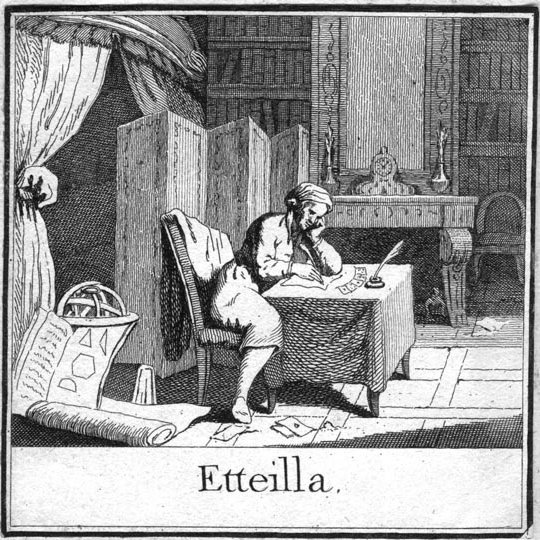
For the last two years, I’ve been on a bit of a tarot quest. I set out to learn more about Jean-Baptiste Alliette and his cartomancy system, specifically the meanings he assigned to his 78-card tarot deck. First, of course, I’m begging the question here with an assumption that you’re familiar with this noteworthy figure in tarot history. But, perhaps not. So let’s begin there with a look at who Jean-Baptiste Alliette was.
For today’s students of tarot and tarot history, he’s known more familiarly as “Etteilla” — which is, you’ll note, simply his surname spelled in reverse. He carved a place for himself in cartomancy by developing a system of interpretation first for a “Petit Jeu” deck of 32 cards, and then, later with a system for the full 78-card tarot deck, complete with meanings assigned for both upright and reversed cards.
I don’t think it’s necessary to delve too deeply into his personal life story. We should note that he lived from 1738 to 1791, he was from France, and is said to be the first professional card reader, making his living through divination.
For me personally, “Etteilla” was little more than an interesting note in tarot history. While I find history fascinating in a general sense, where “card history” is concerned, I’ve never felt it necessary to teach it as part of tarot instruction. For those students who have an interest, of course, I’ve encouraged them to explore the history of tarot, but my position has always been that we can become proficient users of tarot without having a knowledge of their history. In fact, there are so many different ideas and uncertainties about the “origin” of tarot that trying to follow their development can quickly lead to confusion and frustration. Better, IMHO, to focus on learning how to best use the cards and to appreciate how they’ve evolved through the years to become meaningful to us in today’s modern world.
But then, somewhere, somehow, I was bitten by this little “Etteilla bug”. I became curious and wanted to know more, not so much about HIM as about the meanings he assigned to the 78 cards of tarot. Little did I know that I would soon find myself off on a quest which I didn’t even understand!
I read meanings. I reviewed Etteilla’s biography. I struggled through translations of his work. I threw up my hands in despair from time to time, and as often as not I wondered what possible reason I had for even wanting to pursue this avenue of study. What was I trying to accomplish?
Gradually I came to understand my reasons. Perhaps it’s a way to honor Etteilla or to acknowledge his contribution to the art of tarot, but my ultimate goal was to find a way to make his work relevant for today’s readers. Not an easy task.
I’ve stumbled and bumbled around on this twisted, turning pathway for nearly two years now, and it’s only been in recent weeks that I feel I’ve really started coming to terms with what I want to do. It’s only now that I’m seeing glimmers of hope that maybe it’s possible to bring Etteilla’s interpretations forward into the 21st century. Or maybe I’m just a bit delusional here.
As I continue my studies and my attempts to make Etteilla meaningful and useful, I’ll be chronicling the experience here. If you’d like to follow along, welcome. I don’t profess to be a scholar, but I do come to this project with curiosity and a sense of adventure. My ideas may seem foolish to many, and that’s all right. FOOLS can have fun, and for me, that’s what I’m doing here.
If you want more objective information about Jean-Baptiste Alliette, his life, and his work, here are a few online resources you can visit.
Again, as a bit of a disclaimer here, I’d like to add that my work is NOT intended to be a scholarly study of Etteilla and his role in tarot history. What I hope to do is find relevancy in his ideas, to find ways to adopt his practices to make them “usable” for modern-day tarot readers. I make no claim for historical accuracy. My objective is simply to enrich my tarot knowledge, to share what I learn, and to give other readers an opportunity to expand their understanding of these beautiful 78 cards.
We’ve come to a new month, and even though the season itself hasn’t changed, something in the air is most definitely different. In the northern hemisphere, there’s a chill in the air. We’ve had a bit of frost here and there, but mostly the days have still been sunny and pleasant. No more. It’s cold and damp. Darkness comes early. I’m getting that “let’s close the doors and hunker down” feeling.
It’s different, of course, for those on the other side of the world. “Summer is icumen in…” as an old, old song says, and go ahead and click the link. I dare you!
I don’t know if our down-under friends feel a sudden change when November 1 rolls around on the calendar, but for me, everything seems to change overnight, as October bids farewell and November moves in.
I recently read about the “voices” of November — again, speaking of those we hear in the “top” of the world. We so often think of winter as a time of silence, but the weeks leading up to it are filled with familiar sounds.
The wind rustles the leaves in the trees. Sometimes it’s barely more than a gentle whisper; other times the wind roars like a banshee. We often have thunderstorms with “the gods playing noisy games” in the heavens.
And all those leaves that fall? Oh, what delicious sounds they make as we walk through them. I love grabbing a heavy sweater or light jacket and walking one of our nearby hiking trails, shuffling my feet through the leaves. I’ll always remember, too, the year we had a pair of brown thrashers visit us. What fun to listen to them truly “thrashing” through the leaves along the edge of the house.
This is also the time of year when geese head south, and what a thrill to hear them honking as they form their V-shape and fly through the brilliant blue skies. How do they do it’s time to go? How do they find their destination? Just another mystery and miracle of nature.
Those who live near wooded areas may also hear the sounds of turkeys gobbling. If you’ve ever gone walking through the woods early in the morning and had a flock of turkeys suddenly rise up and take to the sky, you know how noisy — yet beautiful — they can be.
November also brings one of the most haunting bird calls of all — the wise old owl. His hoot-hoot call can send shivers down the spine. Yet at the same time, that familiar autumn voice can be comforting and soothing.
Indeed, there are many voices in November, and I love listening to them all. For me, November is a bit like a “last hurrah” of autumn before the ice and snow comes and shuts things down. A few weeks from now, the lakes and rivers will freeze over. Heavy snowfall will make it difficult to even think about getting out and going places. I don’t like winter, even though I can see the beauty in it.
I know that winter serves its purpose in the natural world, and in our human world, as well. We need time to rest, time to withdraw, time to turn our attention to hearth and home, to celebrate holidays with those we love.
But first comes November. It’s a time of looking back and looking ahead. A time to think about past, present, and future. A time to appreciate the colors of Mother Nature and to listen to the many voices she speaks with at this very special time of year.
Intuition. It’s that word we all toss around, especially in the presence of the High Priestess. But what is it, really? Can we learn to hear it?
Listening to Your Intuition
No one can accurately define or quantify intuition. It’s been described by some as part of our conscience, quick to let us know if our behavior is crossing a boundary, and by others as a voice of spirit sent to guide us and warn us of potential dangers.
Many of us refer to it as a gut feeling. Sometimes we simply know something, and we know that we know it, but we don’t know how. It’s just our intuition.
The High Priestess of Tarot represents intuition, mystery, hidden knowledge, and spiritual wisdom. It’s a powerful card that encourages us to look deep within ourselves and to trust that still, small voice that sometimes whispers in our ear.
Men sometimes scoff at the idea of intuition, or think it to be exclusively a feminine trait. Not true. Both men and women do have the capacity for intuition. Whether we’re male or female – or any combination thereof – most of us can benefit from tuning in and listening more closely to our intuition.
Today, the High Priestess herself will be guiding us, offering helpful ideas on how to strengthen and use your intuitive powers.
Grab Your Tarot Deck and Let’s Get Started
Shuffle your Tarot deck and focus your thoughts on the High Priestess. Ask for her guidance. Turn the cards over one by one until you come to the first Major Arcana card. This card is your special message from the High Priestess.
Scroll down to read your message, and then work through the simple exercises that follow.
Fool
If the Fool appears, you might need to embrace the Fool’s qualities of openness and curiosity when it comes to your intuition. Maybe you need to let go of preconceived ideas and expectations so that your intuition feels free to come out and play. The Fool teaches us a lot about trusting in the universe. Sometimes things aren’t logical. Sometimes our intuition can seem nonsensical.
With this card, you’ll want to be willing to listen even when that still small voice doesn’t seem to be making any sense. This doesn’t mean, of course, that you should go blindly jumping off cliffs! It does mean, though, to open yourself up to unexpected possibilities that come your way. Be willing to listen to whatever your intuition says.
Magician
If the Magician appears as a guide for improving your intuition, it suggests that you have the potential to master your intuition, just as the Magician masters the elements. The Magician is all about channeling your inner power and manifesting your desires, and in this context, it could be about learning to harness your intuition and make it work for you.
The Magician advises you to practice and refine your intuitive abilities, much like you would practice a skill. It’s about discipline, focus, and willpower. It could also suggest using your logical mind to understand and interpret your intuitive impressions, or using tools like tarot, meditation, or journaling to strengthen your connection to your inner wisdom.
High Priestess
If the High Priestess herself appears to teach you about intuition, the message is about deepening your understanding and connection to your inner wisdom. The High Priestess encourages you to quiet your mind, listen to your dreams and gut feelings, and trust the messages that come from within.
It’s a reminder that intuition isn’t just a feeling or a hunch—it’s a deep well of knowledge that’s available to you if you know how to listen. The High Priestess is inviting you to become more introspective, meditative, and receptive, so that you can hear the whispers of your inner voice more clearly.
Empress
If the Empress appears as a guide for intuition, she teaches us to connect with our senses and the natural world. The Empress represents creativity, abundance, and fertility—not just in the physical sense, but also in terms of ideas and inspiration. She encourages us to pay attention to the messages we receive from our environment, from our bodies, and from our emotions.
The Empress might suggest that you can improve your intuition by spending time in nature, practicing mindfulness, or engaging in creative activities. It’s about tuning into the rhythms and cycles of life, and trusting the guidance that comes from our instincts and our connection to the earth.
Emperor
Despite the Emperor’s seemingly logical and authoritative nature, he can still teach us valuable lessons about intuition. The Emperor is a master of structure, discipline, and organization, and these qualities can actually be helpful for honing our intuition.
The Emperor reminds us that intuition isn’t just about feeling our way blindly through the world—it’s also about creating a framework within which our intuition can flourish. This might mean creating daily rituals for connecting with our inner voice, setting aside time for meditation or journaling, or even using tools like tarot to give structure to our intuitive insights. The Emperor shows us that intuition and logic aren’t necessarily opposed—they can work together to create a fuller understanding of ourselves and the world around us.
Hierophant
The Hierophant represents traditional wisdom, spiritual guidance, and the bridge between the physical and spiritual worlds. When it comes to intuition, the Hierophant encourages us to see our inner voice as a source of divine guidance and to trust in the wisdom that comes from a higher power.
The Hierophant may suggest that we can improve our intuition by connecting with our spiritual traditions or seeking guidance from teachers, mentors, or spiritual leaders. It’s about recognizing that our inner voice is not just a product of our individual minds, but is also connected to a larger spiritual reality. The Hierophant reminds us that by trusting in this higher wisdom, we can learn to hear the voice of spirit more clearly and live in alignment with our deepest values and beliefs.
Lovers
The Lovers card teaches us that intuition is also about balance, harmony, and making choices that align with our highest good. The Lovers represents the union of opposites, the integration of different aspects of ourselves, and the power of love to guide us on our path.
In terms of intuition, the Lovers encourages us to listen to the voice of our hearts and to trust the guidance that comes from our deepest desires and values. It’s about making choices that feel authentic and true to who we are, even if they don’t always make sense on a logical or practical level. The Lovers reminds us that intuition is a powerful force that can guide us towards greater love, fulfillment, and harmony in our lives.
Chariot
The Chariot card teaches us that intuition can be a powerful tool for taking control of our lives and directing our own destiny. As a symbol of higher consciousness and willpower, the Chariot reminds us that we have the power to overcome obstacles and achieve our goals when we tap into our inner wisdom and trust our instincts.
In terms of intuition, the Chariot encourages us to take a proactive approach to listening to our inner voice. Rather than waiting for intuitive insights to come to us passively, we can actively seek them out by setting intentions, visualizing our desired outcomes, and taking inspired action towards our goals. The Chariot is a call to harness our intuition as a force for transformation and empowerment.
Strength
The Strength card teaches us that intuition is also about harnessing our inner power and cultivating emotional resilience. The card depicts a woman gently taming a lion, symbolizing the ability to control our emotions, impulses, and lower instincts through inner strength and compassion.
In terms of intuition, Strength reminds us that our inner voice can sometimes be drowned out by fear, anxiety, or other negative emotions. By cultivating emotional resilience and self-awareness, we can learn to quiet the chatter of our minds and hear the still, small voice of intuition more clearly. Strength encourages us to approach our inner work with patience, gentleness, and self-compassion, trusting that our intuitive guidance will emerge when we create the right conditions for it to be heard.
Hermit
The Hermit is very much about solitude, introspection, and tuning out the external noise in order to tune into our inner voice. In this card, we see an old man alone on a mountaintop, holding a lantern that represents the light of inner wisdom.
The Hermit encourages us to make space for silence, contemplation, and self-reflection in our lives. It’s only when we step back from the busyness and distractions of the external world that we can hear the subtle whispers of our intuition. The Hermit reminds us that sometimes the most powerful insights come from within, and that it’s important to take time for self-discovery and spiritual growth.
Wheel of Fortune
The Wheel of Fortune often represents cycles, change, and the idea that some things are beyond our control. When this card appears, it can be a reminder to let go of our need to control everything and trust in the larger forces at play.
In terms of intuition, the Wheel of Fortune encourages us to surrender to the flow of life and to listen to the messages that come from our higher selves. Sometimes, our intuition will guide us to step back, release our attachment to a particular outcome, and allow the universe to work its magic. The Wheel reminds us that we are part of a larger whole, and that our intuition is often a way for us to connect with that larger intelligence and find our place in the grand scheme of things.
Justice
With Justice, we can think of intuition as a kind of inner compass that helps us navigate complex situations and make wise decisions. While the card often represents balance, fairness, and objectivity, it can also be about aligning our actions with our highest values and deepest sense of truth.
When we make decisions based on intuition, we’re not just weighing pros and cons in a purely logical or rational way. We’re also tuning into our inner sense of right and wrong, our gut feelings about a situation, and our deeper sense of purpose. Justice reminds us that true balance and harmony come not just from external fairness, but also from inner alignment and integrity.
Hanged Man
The Hanged Man is all about surrender, release, and a shift in perspective. It often appears when we’re stuck in a situation and need to let go of our old ways of thinking or doing things.
When it comes to intuition, the Hanged Man encourages us to pause, take a step back, and listen deeply to our inner voice. It’s a reminder that sometimes the best way forward is to stop struggling and let go of our resistance. In that space of stillness and surrender, we can often hear our intuition more clearly and receive guidance about the next steps to take. The Hanged Man is a powerful invitation to trust the process and allow our intuition to lead the way.
Death
Death is indeed a card of transformation and rebirth. When it comes to intuition, Death reminds us that growth and change often involve a kind of shedding or releasing of old patterns, beliefs, and habits.
Intuitively, Death invites us to embrace the natural cycles of life and to be open to letting go of what no longer serves us. Sometimes, our intuition will guide us towards endings or transitions that can be scary or uncomfortable. But by trusting in the process of death and rebirth, we can allow our intuition to guide us through these transformations and emerge on the other side with a deeper sense of clarity and purpose. Death reminds us that change is a natural part of life, and that our intuition is often a compass for navigating those changes with grace and resilience.
Temperance
Temperance is all about balance, moderation, and the merging of opposites. In terms of intuition, Temperance teaches us to find a middle way between extremes and to listen to the quiet voice of our inner wisdom.
Sometimes our intuition can get clouded by strong emotions or attachment to particular outcomes. Temperance encourages us to step back from these extremes and find a place of balance and equanimity. From this place of calm and centeredness, we can hear our intuition more clearly and make decisions that are grounded in wisdom and harmony. Temperance is a reminder that true intuition often arises from a place of balance and inner peace, rather than from the highs and lows of emotional turbulence.
Devil
The Devil might seem like an unlikely teacher when it comes to intuition, but he can actually offer some valuable lessons! The Devil represents temptation, attachment, and the shadow aspects of ourselves that we might be afraid to confront.
Intuitively, the Devil invites us to examine our deepest fears, desires, and unconscious motivations. By shining a light on these shadow aspects of ourselves, we can gain greater self-awareness and clarity about our true needs and motivations. This kind of inner work can help us distinguish between the voice of our intuition and the voice of our fears or desires. The Devil reminds us that true liberation comes from facing our shadows and listening to the deeper wisdom that arises when we do so.
Tower
Despite the chaotic and destructive forces of the Tower, this card holds valuable lessons for developing intuition. It represents sudden change, upheaval, and the dismantling of old structures that no longer serve us.
Intuitively, the Tower encourages us to tune into our inner voice amidst the chaos and uncertainty that life can bring. By embracing change and letting go of our attachments, we can learn to trust the transformative power of our intuition. The Tower reminds us that sometimes, our intuition may guide us towards uncomfortable or disruptive paths, but these experiences ultimately help us grow and evolve.
In the face of upheaval, the Tower invites us to surrender control and listen to the deeper wisdom that arises when we allow ourselves to be transformed. By doing so, we can learn to trust our intuition as a guiding force that leads us towards greater authenticity and alignment with our true selves.
Star
The Star is a beautiful card that represents hope, renewal, and healing. In terms of intuition, the Star invites us to trust in our inner light and to have faith in the journey ahead.
When we’re in touch with our intuition, it can often feel like a guiding star, leading us through the darkness and towards our highest good. The Star reminds us to stay open to the possibilities that lie ahead, even when the path isn’t immediately clear. By trusting in the light of our intuition, we can navigate through challenges and obstacles with grace and resilience. The Star is a powerful symbol of hope, and a reminder that our intuition can be a source of light and guidance even in the darkest of times.
Moon
the Moon can be a tricky card that represents illusion, confusion, and the unconscious. When the Moon appears, it’s often a sign that our perception of a situation may be clouded or distorted.
Intuitively, the Moon invites us to dig deeper and look beyond surface appearances. Our intuition can help us navigate the shadowy realm of the unconscious and see through the illusions that may be clouding our vision. By paying attention to our dreams, gut feelings, and subtle impressions, we can start to untangle the threads of confusion and see the situation more clearly. The Moon reminds us that intuition is a powerful tool for navigating the murkiness of the unknown and finding our way back to clarity and truth.
Sun
While the Sun is often associated with logic, reason, and conscious awareness, it can also offer some valuable lessons about intuition. The Sun represents clarity, illumination, and the power of the conscious mind to penetrate the darkness of the unknown.
Intuitively, the Sun reminds us that our conscious mind and our intuition are not necessarily at odds with one another. In fact, our logical, rational mind can be a powerful ally in interpreting and making sense of our intuitive impressions. By combining the clarity of the Sun with the subtle, mysterious messages of the High Priestess, we can develop a more well-rounded and integrated approach to intuition. The Sun invites us to shine the light of our consciousness on our inner wisdom, and to use both logic and intuition in our decision-making process.
Judgment
Interestingly, the Judgment card isn’t so much about guilt as it is about awakening, redemption, and forgiveness. In the context of intuition, Judgment invites us to listen to the call of our higher selves and to let go of any limiting beliefs or patterns that may be holding us back.
Sometimes our intuition can point us towards difficult truths or uncomfortable realizations about ourselves or our lives. Judgment reminds us that these moments of reckoning are opportunities for growth and transformation. By facing our shadow aspects with honesty and compassion, we can release the guilt, shame, and self-judgment that can cloud our intuition. Judgment is a call to awaken to our highest potential, and to trust our intuition as a guide towards greater wholeness and self-realization.
World
The World is a card of completion, integration, and wholeness. It represents the fulfillment of our spiritual journey and the realization of our deepest potential. In terms of intuition, the World invites us to trust in the wisdom and guidance that has brought us to this point of completion.
When we’re aligned with our intuition and living in accordance with our deepest values, we can experience a sense of wholeness and integration in our lives. The World reminds us that our intuition is a powerful tool for navigating the journey of life, and that by trusting our inner wisdom, we can find our way to a place of fulfillment and harmony. The World is a celebration of all that we’ve learned and accomplished on our intuitive journey, and an invitation to continue growing, expanding, and trusting in the guidance of our inner voice.
How to Use This Boot Camp Experience
Exercise 1: Once you’ve found your “advice card” as directed by the High Priestess, take a moment to look at its symbolism.
What features stand out to you?
What does this symbolize?
How can you incorporate this symbol or concept into your spiritual practice?
I did this exercise this morning and drew Temperance as my advice card. When I looked at the card, what most caught my attention was the water flowing from one cup to the next. To me, this symbolizes the peacefulness I feel in nature — the gentle flow of a stream. I can strengthen my intuition by closing my eyes and envisioning a quiet stream or by listening to the sounds of nature.
Exercise 2: Read your advice again. Write down three keywords or phrases. Use these words to create one or more personal “Intuitive Affirmations”.
The keywords I chose from Temperance were “balance, moderation, and calm”. I wrote the following affirmation:
Balance, moderation, and a calm spirit allow me to tap into my intuition.
I center myself within the stillness and listen to my inner voice.
Exercise 3: Find the most meaningful phrase or sentence within the advice you received. Write this down and carry it with you throughout the day, or post it somewhere nearby where you will see it often and be reminded of it.
What I found most meaningful in Temperance was this reminder: Sometimes our intuition can get clouded by strong emotions or attachment to particular outcomes. I’ve copied this on a note card, and I will keep it tucked into my pocket today. It will help me remember that my intuition needs stillness and peacefulness — that I can’t expect it to function effectively if I’m feeling strong emotions or if I’m set on a particular outcome. This helps me understand and appreciate the need to be open for new possibilities.
Exercise 4: Look again at the card you’ve drawn.
What symbol or feature most puzzles you?
What do you most dislike about your card?
What can you learn from this?
Take a moment to think about these questions; learn what any symbols might mean. How might you apply this new knowledge and understanding in developing your intuitive abilities?
My personal experience here was very interesting. What I disliked most in my Temperance card was the odd symbol on the figure’s forehead. I had to do a bit of quick research. I learned that this symbol actually represents the “third eye” and intuition. Does this mean I’ve been resistant to developing my intuition? Could it mean that I need to work on opening my “third eye chakra”? These are definitely ideas I will consider.
Exercise 5: Study the card closely. Look at every symbol. Notice all the colors. Now, write down your personal feelings about the card and what it means in your life.
I won’t share all my personal thoughts here, but the overall experience from this exercise for me was a greater awareness of the complexities of Temperance. I know my intuitive abilities will work more effectively when I am balanced and quiet. I know not to expect my intuition to function well in times of noise and when I’m experiencing strong emotions. I feel I’ve learned a lot about my intuition and how to strengthen it.













 Sabbats, Seasons, and Tarot Spreads